A game controller is only useful when your computer actually recognizes it. If you’re searching for connectivity HSSGamePad, you’re probably trying to solve one of the most frustrating parts of using a controller: getting the hardware, operating system, HSSGamePad, and HearthStats connection to cooperate.
HSSGamePad is described in current online material as a controller-oriented tool associated with HearthStats functions such as controller detection, button mapping, profiles, and match-related tracking. However, descriptions of its supported platforms and features aren’t completely consistent across sources, so checking your specific software version is important.
The good news is that most connectivity problems can be approached logically. Instead of changing several settings at once, work through the connection chain one step at a time.
Controller → Operating System → HSSGamePad → Profile/Mapping → HearthStats
That simple approach can save a surprising amount of time.
What Is HSSGamePad?
HSSGamePad is described as a controller interface or mapping utility associated with HearthStats. Depending on the version, it may allow users to connect a gamepad, assign physical buttons to supported actions, create profiles, and interact with HearthStats-related tracking functions.
One important distinction is worth making upfront: HSSGamePad should not automatically be confused with native controller support built directly into a game.
A controller-mapping application can translate physical controller inputs into actions recognized by another application. Native controller support, by contrast, is implemented directly by the game or software itself.
That distinction matters when troubleshooting because a controller can be perfectly functional while a particular application still fails to recognize it.
Understanding Connectivity HSSGamePad
When people talk about connectivity HSSGamePad, they’re usually referring to the complete path between the physical controller and the software.
Think of it as five separate layers:
- Controller hardware — The gamepad has power and is functioning.
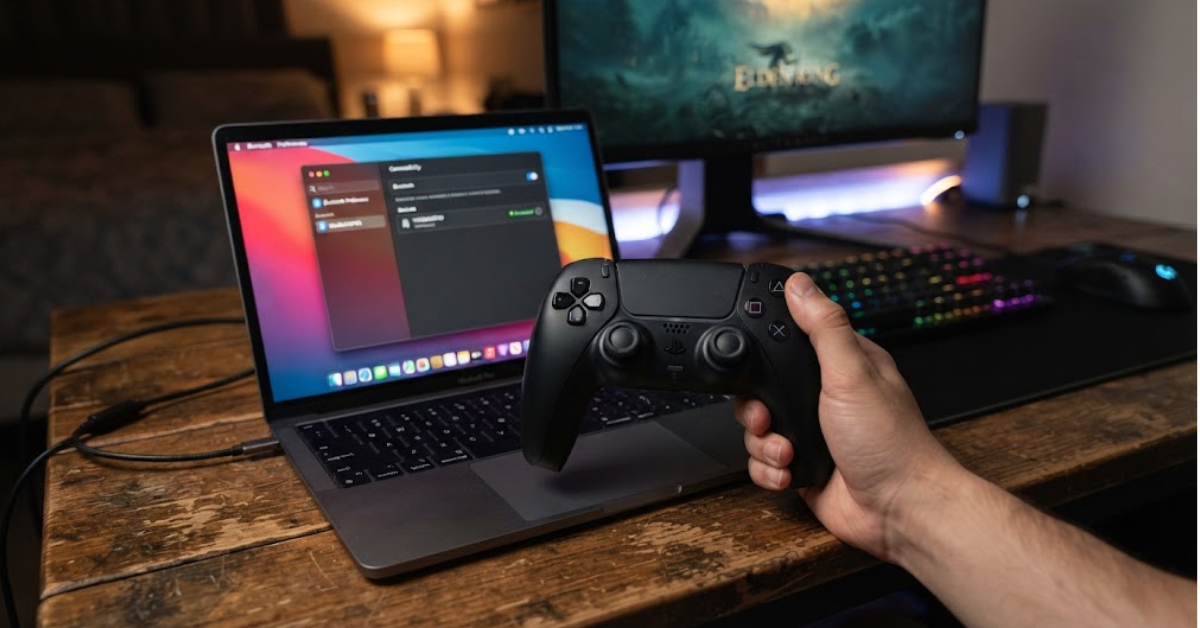
- Connection — USB or Bluetooth establishes communication.
- Operating system — Windows or macOS recognizes the controller.
- HSSGamePad — The application detects the device.
- HearthStats integration — Supported actions or tracking functions work correctly.
A failure at any one of these stages can make the entire setup appear broken.
For example, if Windows doesn’t recognize the controller, changing an HSSGamePad button mapping won’t solve the problem.
Likewise, if HSSGamePad detects the controller but HearthStats doesn’t receive the expected action, repeatedly pairing the controller isn’t likely to help.
USB vs Bluetooth Connectivity
One of the first decisions you’ll make is whether to use a wired or wireless connection.
USB Connection
USB is often the simplest way to establish a baseline connection.
With a wired setup, you don’t have to deal with Bluetooth pairing, wireless interference, or controller battery levels. It can therefore be particularly useful when you’re diagnosing a problem.
If your controller works through USB but fails through Bluetooth, you’ve already learned something valuable: the controller itself is probably functional, and the problem is more likely related to wireless pairing, Bluetooth drivers, interference, or configuration.
Bluetooth Connection
Bluetooth provides the convenience of wireless play, but it introduces another layer of variables.
Potential problems include:
- The controller isn’t in pairing mode.
- The controller is already paired with another device.
- The battery is low.
- Bluetooth is disabled.
- The device is outside a reliable range.
- Another wireless device is causing interference.
- The operating system has a Bluetooth or driver issue.
Current HSSGamePad-related guides commonly recommend testing USB when Bluetooth connectivity becomes difficult because it removes several variables from the troubleshooting process.
How to Set Up Connectivity HSSGamePad
The safest setup process is to keep things simple at first.
Step 1: Check Your Controller
Before opening HSSGamePad, make sure the controller itself is working.
Check:
- Is the battery charged?
- Does the controller turn on?
- Does the cable support data if you’re using USB?
- Does the operating system detect it?
- Do the buttons and analog sticks respond?
If the controller isn’t recognized anywhere on your computer, focus on the controller and operating system before troubleshooting HSSGamePad.
Step 2: Connect the Controller
For USB, connect the controller directly to the computer using a known-good data cable.
For Bluetooth, enable Bluetooth on your computer and put the controller into its pairing mode. Then select the controller from the operating system’s Bluetooth device list.
Don’t immediately launch into advanced configuration.
First establish a reliable basic connection.
Step 3: Confirm Operating System Detection
This step is easy to overlook.
Your operating system should recognize the controller before you expect HSSGamePad to use it.
If Windows or macOS detects the controller and its inputs respond correctly, you’ve confirmed that the hardware-to-OS connection is working.
That gives you a useful starting point for diagnosing any problem that happens afterward.
Step 4: Open HSSGamePad
Once the operating system recognizes the controller, launch your HSSGamePad build.
Look for the controller or input-device section and confirm that the expected device appears.
If the controller works in the operating system but doesn’t appear inside HSSGamePad, the problem is now much more specific.
You can investigate:
- HSSGamePad version
- Controller compatibility
- Input mode
- Permissions
- Conflicting controller software
- Application configuration
Current guides emphasize checking the exact HSSGamePad build because online descriptions of supported platforms and functionality can differ.
Controller Mapping in HSSGamePad
Once connectivity works, the next step is button mapping.
The basic idea is straightforward:
Physical button → HSSGamePad mapping → supported action
Some current descriptions of HSSGamePad discuss mapping controller buttons to HearthStats-related functions, including tracking actions, tags, profiles, and short- or long-press commands.
Don’t start by configuring every possible button.
Instead, create a simple test profile.
A Better First Profile
Start with:
- One controller
- One profile
- One or two button assignments
- Default settings
- A simple connection method
Test those settings first.
If everything works, gradually add additional mappings.
This makes troubleshooting much easier because you’ll know exactly which change introduced a problem.
XInput vs DirectInput
If your controller is detected by the computer but the buttons appear incorrectly inside an application, the input standard may be relevant.
Two terms you may encounter are XInput and DirectInput.
XInput is commonly associated with Xbox-style controller input on Windows. DirectInput is an older and broader Windows input interface that can represent controller devices differently.
The same physical button can therefore appear differently to software depending on the controller’s operating mode and the input interface being used.
If HSSGamePad recognizes your controller but the buttons don’t correspond to what you expect, check whether your controller supports different input modes and whether the application expects one particular format.
Don’t assume a faulty controller just because the button numbering looks strange.
Common Connectivity HSSGamePad Problems
Connectivity problems usually fall into a few recognizable categories.
Problem 1: The Controller Isn’t Detected Anywhere
Start with the hardware.
Try:
- Charging the controller.
- Reconnecting the USB cable.
- Testing another USB port.
- Trying another known-good data cable.
- Restarting the controller.
- Restarting the computer.
- Re-pairing Bluetooth if you’re using wireless mode.
If the controller still doesn’t appear in the operating system, HSSGamePad probably isn’t the first thing you need to troubleshoot.
Problem 2: Windows or macOS Detects It, but HSSGamePad Doesn’t
This is a more useful diagnostic clue.
It means the basic controller-to-operating-system connection is working.
Now check:
- HSSGamePad compatibility
- Software version
- Controller model
- Input mode
- Application permissions
- Conflicting controller utilities
- Active profiles
Avoid repeatedly pairing a controller that the operating system already recognizes.
Problem 3: HSSGamePad Detects the Controller but Buttons Don’t Work
Check your mapping.
A controller can be detected successfully while individual inputs remain unassigned or incorrectly assigned.
Create a very basic profile and test one button.
If that works, add the remaining mappings gradually.
Problem 4: One Button Triggers Multiple Actions
This can happen when multiple mappings overlap or another program is also interpreting the controller input.
Check for:
- Duplicate bindings
- Multiple active profiles
- Other controller-mapping software
- Steam Input or similar input layers
- Keyboard shortcuts triggered by the same input
The goal is to identify whether HSSGamePad is receiving one input or whether another application is also responding.
Problem 5: Bluetooth Keeps Disconnecting
Start with the basics.
Make sure:
- The controller has sufficient battery.
- Bluetooth is enabled.
- The controller isn’t simultaneously trying to connect elsewhere.
- The controller is reasonably close to the computer.
- Your operating system is up to date.
- The controller firmware is current where manufacturer support provides updates.
Then try USB.
If the wired connection remains stable, you’ve narrowed the problem considerably.
Why USB Is Useful for Troubleshooting
Even if you ultimately want wireless connectivity, USB is a valuable diagnostic tool.
Consider this example:
Bluetooth: Controller → Computer → HSSGamePad = fails
USB: Controller → Computer → HSSGamePad = works
That comparison suggests the problem isn’t the basic HSSGamePad mapping itself. The wireless connection is the more likely place to investigate.
This is much more useful than randomly changing five settings and hoping something works.
How to Reduce Connectivity Problems
Once your HSSGamePad setup is working, a few habits can make it more reliable.
Keep the Controller Firmware Updated
Manufacturers sometimes release firmware updates that address compatibility, stability, or connectivity problems.
Use the controller manufacturer’s official software or support resources when checking for updates.
Avoid Unnecessary Software Layers
If several applications are trying to control the same gamepad, they can interfere with one another.
A clean setup is easier to diagnose than a computer running several remappers, overlays, virtual controllers, and input utilities simultaneously.
Keep Your Configuration Simple
You don’t need dozens of mappings just because the software allows them.
Use only the controls you actually need.
A simpler profile is generally easier to understand and troubleshoot.
Record Your Working Settings
Once everything works, make a note of:
- HSSGamePad version
- Controller model
- Connection method
- Operating system
- Active profile
- Important configuration settings
This can save considerable time after a software update or controller change.
A Practical Connectivity HSSGamePad Checklist
If HSSGamePad isn’t working, go through this list in order:
Work down the list rather than jumping randomly between settings.
| Check | Question |
| Power | Is the controller charged and turned on? |
| Cable | Does the USB cable support data? |
| USB | Does another USB port work? |
| Bluetooth | Is the controller properly paired? |
| OS | Does Windows or macOS recognize it? |
| HSSGamePad | Does the application detect it? |
| Profile | Is the correct profile active? |
| Mapping | Is the button assigned correctly? |
| Conflicts | Is another controller utility running? |
| Integration | Does the intended HearthStats function respond? |
| Firmware | Is the controller firmware current? |
Tutorial by HearthStats HSSGamePad: What Should You Verify?
Searches for “tutorial by HearthStats HSSGamePad” can lead to several different guides, and they don’t always describe the software in exactly the same way.
That’s important because some online pages make broad claims about controller gameplay, compatibility, latency settings, overlays, or advanced configuration that aren’t consistently supported by the available documentation.
Current material associated with HearthStats focuses more clearly on controller detection, button mapping, profiles, and HearthStats-related tracking functions.
Before following any tutorial, verify:
- Your HSSGamePad version
- Your operating system
- Your controller model
- Your connection method
- The features actually available in your build
- The source of the installer
This is especially important when older tutorials and newer software don’t match.
Is HSSGamePad Official Hearthstone Controller Support?
This is another point where it’s worth being careful.
Current online material presents HSSGamePad as a third-party tool associated with HearthStats functionality. There isn’t sufficient evidence in the sources reviewed here to describe it as official Blizzard-developed controller support for Hearthstone.
That distinction doesn’t necessarily make the software unsuitable. It simply means users shouldn’t assume that every feature described by a third-party website is an officially supported Hearthstone feature.
If you’re installing any third-party controller utility, download it only from a source you can verify and be cautious about installers requesting unnecessary permissions.
Security Tips for HSSGamePad Users
Connectivity isn’t only about whether the controller works.
If a software tool asks you to connect an account or provide an API credential, treat that information as sensitive.
Never publicly post:
- API keys
- Account tokens
- Passwords
- Authentication credentials
- Private configuration files containing secrets
Don’t paste credentials into random tutorials, forums, or support messages.
If a credential is accidentally exposed, use the service’s official account controls to revoke or regenerate it when that option is available.
Frequently Asked Questions
What is connectivity HSSGamePad?
Connectivity HSSGamePad generally refers to the process of establishing communication between a compatible controller, your operating system, HSSGamePad, and supported HearthStats functions. Troubleshooting is easiest when each part of that chain is tested separately.
Why isn’t HSSGamePad detecting my controller?
First check whether Windows or macOS recognizes the controller. If the operating system doesn’t detect it, troubleshoot the controller, cable, Bluetooth connection, or drivers first. If the OS detects it but HSSGamePad doesn’t, investigate application compatibility, settings, permissions, and controller input modes.
Is USB or Bluetooth better for HSSGamePad?
USB is often the better choice for troubleshooting because it eliminates Bluetooth pairing and wireless interference. Bluetooth is convenient once the setup is stable, but it introduces additional variables such as battery level, pairing, and wireless interference.
Can HSSGamePad work with Xbox controllers?
Current online HSSGamePad material describes support for Xbox controllers and other compatible gamepads, but exact compatibility can depend on the software version and operating system. Verify your specific controller against the documentation for your build rather than assuming every model is supported.
Can HSSGamePad work with PlayStation controllers?
Some current descriptions mention DualSense and DualShock 4 support on compatible systems. However, controller compatibility can vary by operating system and HSSGamePad version, so it’s best to confirm support for your exact model before relying on it.
Why does my HSSGamePad connection keep dropping?
Common causes include low controller battery, Bluetooth interference, an unstable connection, outdated firmware, conflicting input software, or operating-system issues. Testing the same controller through USB is a useful way to determine whether wireless connectivity is the problem.
Does HSSGamePad provide full controller support for Hearthstone?
The available current descriptions do not clearly establish complete native controller support for every Hearthstone action. Current material focuses more specifically on controller mapping and HearthStats-related tracking functions, so users shouldn’t assume that every mouse or keyboard action can automatically be replaced.
How can I troubleshoot HSSGamePad without making things worse?
Change one thing at a time. First confirm the controller works, then verify operating-system detection, then HSSGamePad detection, then mappings, and finally HearthStats integration. This layered approach makes it much easier to identify the actual source of the problem.
Conclusion: Making Connectivity HSSGamePad More Reliable
Getting connectivity HSSGamePad working doesn’t have to become a guessing game.
The most reliable approach is to troubleshoot the entire connection chain in order:
Controller → USB/Bluetooth → Operating System → HSSGamePad → Mapping → HearthStats
Start with the simplest configuration possible. Confirm that the operating system recognizes your controller before changing HSSGamePad settings, and use USB as a baseline if Bluetooth is giving you trouble.
Also keep an eye on version differences. Current online information about HSSGamePad isn’t completely consistent, so don’t assume that a feature described in an older or third-party tutorial exists in your particular build.
Once the basic connection works, add your mappings gradually and keep a record of the configuration that works. That way, if something breaks after an update or device change, you have a known-good setup to return to.
For anyone following a tutorial by HearthStats HSSGamePad, the same rule applies: verify the version, controller, operating system, and available features before making advanced changes. A careful, step-by-step setup is usually far more effective than trying a dozen fixes at once.